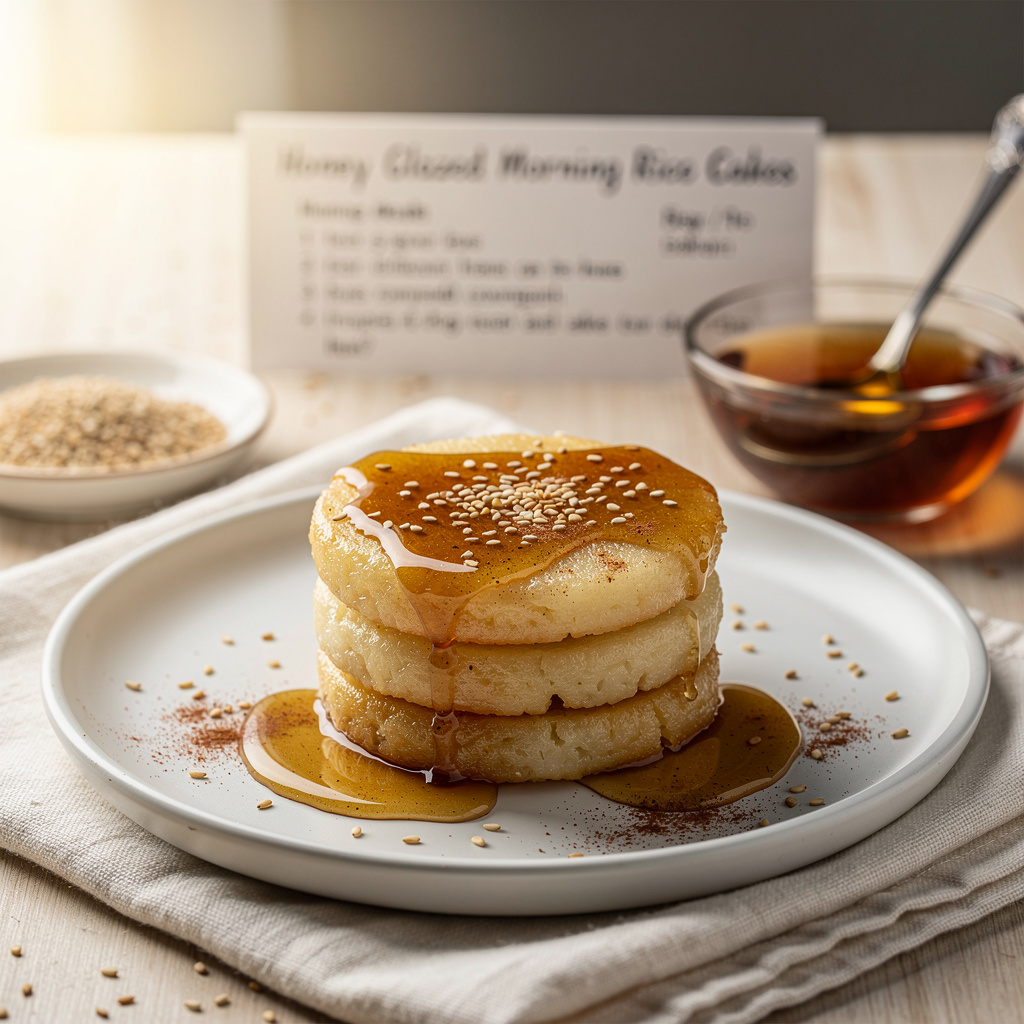
Honey Glazed Morning Rice Cakes
Pillowy, chewy rice cakes pan-fried until golden and lacquered with a sweet soy-honey glaze that caramelizes into an irresistible sticky coating. These breakfast tteok are a simpler, sweeter take on the classic Korean rice cake, perfect for a quick morning treat. The contrast of crispy edges and bouncy, mochi-like centers is pure textural bliss.
Ingredients
- 2 cups glutinous rice flour
- 1/2 teaspoon salt
- 3/4 cup hot water
- 2 tablespoons sugar
+ 8 more ingredients
Instructions
In a large bowl, combine the glutinous rice flour, salt, and sugar. Gradually add the hot water while stirring with a wooden spoon until a soft, pliable dough forms.
Knead the dough on a lightly floured surface for 3 to 4 minutes until smooth and no longer sticky. If the dough cracks, add warm water one teaspoon at a time.
Divide the dough into 16 equal pieces. Roll each piece into a ball, then flatten into a disc about 1/2 inch thick and 2 inches across.
Bring a pot of water to a boil. Add the rice cakes and cook for 3 to 4 minutes until they float and become translucent. Drain well and pat dry gently.
In a small bowl, whisk together the honey, soy sauce, brown sugar, and sesame oil to make the glaze.
Heat a large non-stick skillet over medium heat. Add the vegetable oil and butter. When the butter foams, add the boiled rice cakes in a single layer.
Pan-fry for 2 to 3 minutes per side until golden brown and lightly crispy on the surface.
Pour the honey-soy glaze over the rice cakes in the pan. Toss and cook for 1 more minute until the glaze thickens and coats each piece evenly.
Transfer to a plate, sprinkle with sesame seeds and a dusting of cinnamon, and serve immediately while warm and chewy.
Nutrition Estimate
Per serving • Estimated by Blinner AI